How to Prepare for a Google Interview: Advice From a Former Googler
- Andrew C. Lewis
- 28 Sep, 2026
- 03 Mins read
I worked at Google, and I went through its hiring process myself. From the outside it looks mysterious. From the inside, it is a very structured process, and once you understand the structure, you can prepare for each part on purpose.
Here is how it usually works for software engineering roles, and what I would focus on if I were preparing today.
The process, step by step
The exact steps vary by role, level, and location, but most candidates go through these stages:
- Recruiter call. A short conversation about your background, the roles you are interested in, and the timeline. It is not technical, but it matters. Be clear about your level and what you want.
- Technical phone or video screen. Usually one or two coding interviews in a shared editor. Expect a data structures and algorithms problem, sometimes with a follow-up.
- The interview loop. Several interviews in one day or spread over a few days, usually a mix of coding, system design for more senior roles, and a behavioral interview about how you work with others.
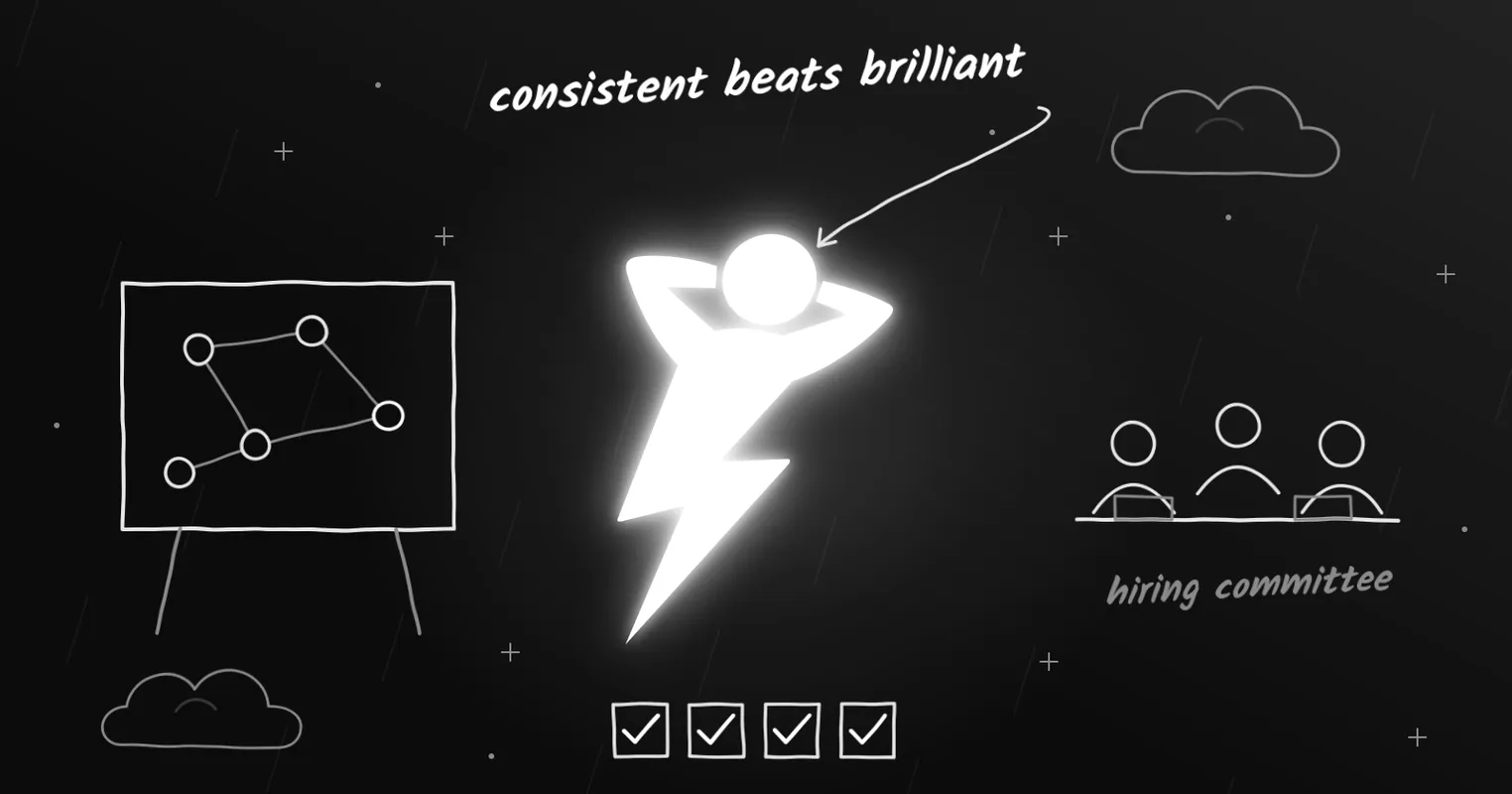
- Hiring committee review. Your interviewers write detailed feedback. A group that did not interview you reviews it and decides. This is why consistent performance across all interviews matters more than one brilliant round.
- Team matching and offer. For many roles, you talk with teams that have open positions before the final offer.
Coding interviews: what they really test
Google coding interviews are not only about getting the right answer. Interviewers look at:
- How you clarify the problem before you start.
- How you think out loud. Silence makes it hard for the interviewer to write good feedback about you.
- Your code quality: clear names, clean structure, and handling of edge cases.
- Complexity: you should always be able to state the time and space complexity of your solution.
The most common mistake strong engineers make is jumping straight into code. Spend the first few minutes on examples and edge cases. It feels slow, but it is exactly what the interviewer wants to write down. Our coding interview plan walks through a routine you can repeat in every round.
System design for senior roles
If you are applying at a mid or senior level, expect at least one system design interview. Use a clear structure: requirements, scale, high-level design, a deep dive, and trade-offs. Our system design framework covers each step.
The behavioral interview
Google looks for people who work well in teams, deal well with ambiguity, and care about users. Prepare real stories about:
- A time you disagreed with a decision and how you handled it.
- A time you helped a teammate succeed.
- A project with unclear requirements that you still delivered.
Use the STAR method and keep each answer to about a minute and a half.
My practical advice
- Practice in a plain editor. Many screens use a simple shared document without autocomplete.
- Do mock interviews out loud. Thinking clearly while talking is a skill, and it improves fast with practice.
- Prepare questions for your interviewers. Ask about their team and their work. It makes the conversation feel two-sided.
- Treat every round as equally important. The committee reads all the feedback together.
- Do not panic if one round goes badly. Candidates can still get an offer after one weak interview when the rest of the loop is strong.
Where InterviewStorm helps
InterviewStorm was built from this experience. It turns each question into text in real time, suggests a structure for coding, system design, and behavioral answers, and uses your own resume so examples sound like you. Use it for mock interviews while you prepare, and in any interview where AI help is allowed. Try a free session.