The STAR Method: How to Answer Behavioral Interview Questions
- Andrew C. Lewis
- 08 Oct, 2026
- 03 Mins read
“Tell me about a time when you had a conflict with a coworker.” Questions like this show up in almost every interview, from entry-level jobs to senior engineering roles. They are called behavioral questions, because the interviewer wants proof of how you behaved in a real situation, not a promise of how you would behave.
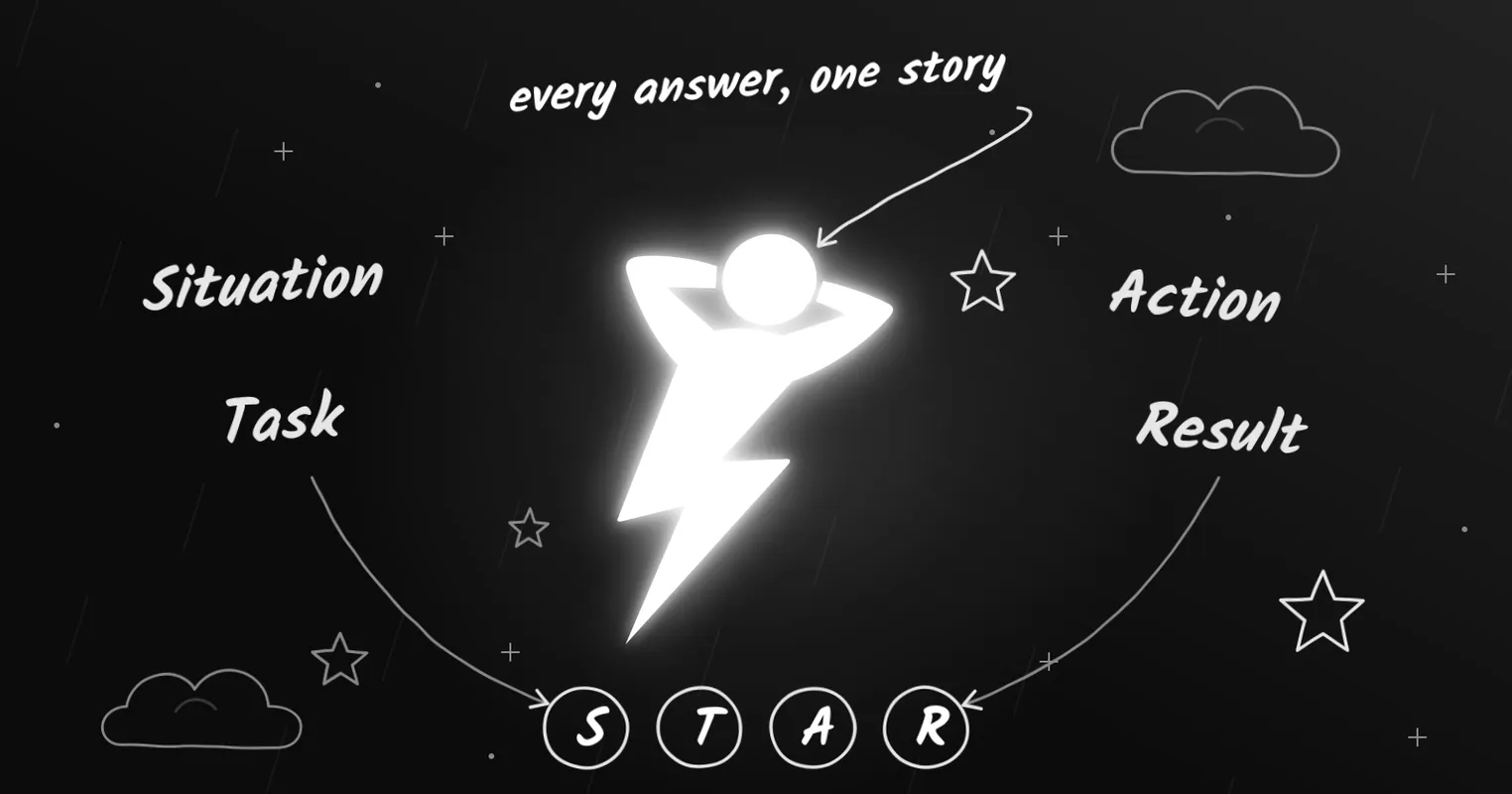
The easiest way to answer them well is the STAR method.
What STAR stands for
- Situation: where you were and what was going on.
- Task: what you were responsible for, or the goal.
- Action: the specific steps you took.
- Result: what happened in the end, ideally with a number.
Many interviewers also like a short fifth part: what you learned. It shows you can reflect on your own work.
Why STAR works
Interviewers often score behavioral answers against a list of skills, such as ownership, teamwork, or handling pressure. A STAR answer makes their job easy. Each part maps to something they want to hear, and the structure stops you from rambling.
A full example
Question: “Tell me about a time you missed a deadline.”
- Situation: “At my last job, I led a payments migration. Two weeks before launch, a vendor changed their API without notice.”
- Task: “I had to decide how to still deliver something useful on time.”
- Action: “I cut scope to the three payment flows that covered most of our volume, shipped those first, and sent the product manager a short daily status note so there were no surprises.”
- Result: “We launched four days late with zero incidents, and the remaining flows shipped in the next sprint.”
- Lesson: “Since then, I add a buffer to any estimate that depends on a third party.”
Notice what makes it strong: it is short, the action part is the longest, and the result is concrete.
Common mistakes
Spending too long on the situation
The situation is context, not the story. Keep it to one or two sentences and move on.
Saying “we” for everything
Teamwork is good, but the interviewer is hiring you. Say what you did: “I wrote”, “I proposed”, “I decided”.
No result
An answer without a result feels unfinished. If you do not have a number, describe the outcome: what changed, who benefited, what you shipped.
Picking a story with no tension
“A time you handled conflict” needs a real disagreement. A story where everyone agreed does not answer the question.
Prepare five stories, not fifty
You do not need a separate story for every possible question. Prepare five strong stories from your experience and practice bending each one to fit different questions:
- A project you are proud of.
- A mistake or failure, and what you learned.
- A conflict or disagreement you resolved.
- A time you led without formal authority.
- A time you worked under a tight deadline.
Most behavioral questions can be answered with one of these five.
How InterviewStorm helps with behavioral rounds
InterviewStorm reads your resume and the job post before the interview. When a behavioral question comes in, it picks a fitting example from your real experience and shapes it into a short STAR answer you can say in your own words. See how behavioral answers work.
It is also a good practice partner: run a session, have a friend ask you common questions, and compare your answer with the suggested structure.
Quick checklist
- Situation and task: two sentences at most.
- Action: the longest part, in the first person.
- Result: a number or a clear outcome.
- Lesson: one sentence.
- Total length: about 60 to 90 seconds when spoken.