Panel Interview Questions and Tips for Zoom and Teams Panels
- Andrew C. Lewis
- 16 Oct, 2026
- 06 Mins read
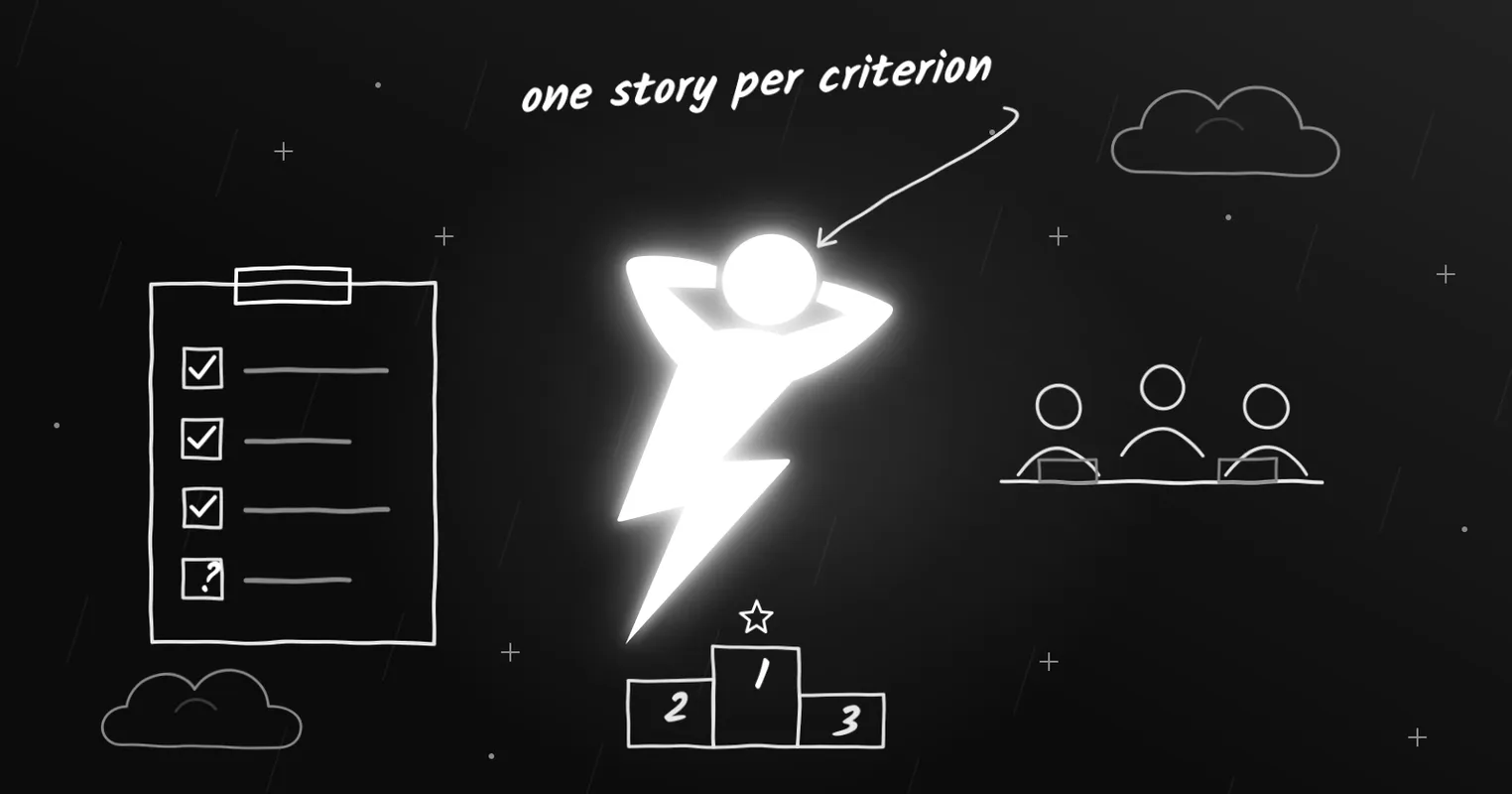
A panel interview is one interview with three to five people at once, often the hiring manager, a teammate, someone from another team, and HR. The questions are mostly the same as in a one-on-one: your background, behavioral “tell me about a time” questions, and role questions. What changes is how you handle the room. Look at the camera, address the person who asked, include the others, and track who asked what so you can follow up. Below: virtual panel tips, 20 common panel questions with sample answers, and follow-up etiquette.
Why companies use panels
A panel lets several people judge you at once, so the process is faster and fairer. Each panelist usually has a focus. The hiring manager looks at fit and results. A peer checks how you work day to day. HR checks motivation and values. Someone from another team checks how you collaborate. Knowing this helps you aim each answer.
Before the panel
- Ask the recruiter who is on the panel. Get names and job titles. Look each person up on the company site or LinkedIn.
- Guess each person’s focus and pick one story that would matter to each.
- Prepare six to eight STAR stories. STAR stands for Situation, Task, Action, Result. Our STAR method guide explains it, and our free STAR Method Answer Builder helps you write them.
- Set up your call. Use our video interview setup checklist.
Virtual panel tips for Zoom and Teams
Who to look at on camera
On video, eye contact means looking at the camera lens, not at the faces. You cannot look at one panelist in particular. So:
- Look at the lens when you speak. Everyone feels addressed.
- Glance at the faces when you finish a point to read reactions.
- Use names to direct your answer: “Good question, Priya.” That replaces the eye contact you would use in a room.
Set up your view
- Use gallery view (Zoom) or gallery or large gallery (Teams) so you can see everyone.
- Move the call window to the top of your screen, close to the camera, so looking at faces keeps your eyes near the lens.
- Rename yourself with your full name if the display name is wrong.
Track who asked what
Panels move fast and people jump in. Keep a simple sheet next to you (paper is quieter than typing):
- One line per panelist: name, role, and what they seem to care about.
- Under each name, a few words on each question they asked.
- A tick when you promised to send something.
This makes your thank-you notes specific, and helps when someone asks, “Going back to Sam’s question…” Short notes like this are usually fine on a video call; see using notes during a video interview.
Include everyone
- Answer the person who asked, then widen: “This is also relevant to the team side, which I think Alex asked about earlier.”
- Watch for quiet panelists. At the end you can say, “Is there anything I can expand on for you?”
- Do not play favorites with the most senior person.
Handle cross-talk and lag
- If two people speak at once, pause and say, “Happy to take both. I’ll start with the first.”
- If audio cuts out, say so right away and ask them to repeat.
- Unmute only when you speak if there is an echo.
20 common panel interview questions with sample answers
The answers below are short outlines. Replace every detail with your own real experience.
About you
1. Tell us about yourself. “I’m a [role] with [X] years in [field]. Most recently I [main result]. I’m looking for [what this role offers], which is why this job stood out.” See our tell me about yourself guide.
2. Why do you want this job? “Three reasons: the product [specific detail], the team’s work on [area], and the chance to do more [skill from the job ad].”
3. Why are you leaving your current role? “I’ve learned a lot, especially [skill]. I want more [scope or focus], and this role offers that.” Stay positive.
4. What is your greatest strength? “Turning messy problems into clear plans. For example, [one-line story with a result].”
5. What is your greatest weakness? “I used to take on too much myself. Now I [specific fix], which has [result].” Our greatest weakness guide has more examples.
Behavioral
6. Tell us about a time you disagreed with a colleague. “We disagreed on [issue]. I asked for their reasons, shared mine with data, and we agreed to [decision]. The result was [outcome].”
7. Describe a time you failed. “I [mistake]. I told my manager straight away, fixed [immediate issue], and added [process change]. It has not happened since.”
8. Give an example of working under pressure. “With [deadline] coming, [problem] hit. I [prioritized, cut scope, asked for help] and we delivered [result].”
9. Tell us about a time you led without authority. “I needed help from [other team]. I showed how it helped their goals, set up [simple process], and we [result].”
10. Describe a difficult stakeholder. “A [stakeholder] kept changing requirements. I set weekly check-ins and wrote decisions down. Changes dropped and we shipped on [date].”
11. Tell us about a time you improved a process. “[Process] took [time]. I [change], and it now takes [new time].”
12. Tell us about a time you had to learn something fast. “I had [timeframe] to learn [tool]. I [method] and delivered [result] on time.”
Role and team
13. How would you approach your first 90 days? “First, listen and learn the systems and people. Then pick one quick win in [area]. By day 90, own [responsibility].”
14. How do you prioritize competing tasks? “By impact and deadline. I check priorities with my manager when two urgent things clash, and I tell people early if something will slip.”
15. How do you work with people in other teams? “I learn what they are measured on, keep them updated without being asked, and write down agreements.”
16. What would your current manager say about you? “That I’m reliable and [trait]. In my last review, they mentioned [specific feedback].”
17. How do you handle feedback? “I ask for examples, decide what to change, and follow up. After feedback on [area], I [change].”
Closing
18. Where do you see yourself in a few years? “Deeper in [skill], taking on [responsibility], ideally growing here.”
19. What are your salary expectations? “Based on the role and my research, I’m looking at [range]. I’m open to discussing the full package.”
20. Do you have any questions for us? Ask one question per panelist where you can: “Priya, what does success look like in the first six months?” “Alex, how do the teams work together day to day?”
Follow-up etiquette
- Send individual thank-you emails within 24 hours, one per panelist if you have their addresses. If not, send one to the recruiter and ask them to pass it on.
- Make each one specific. Mention the question that person asked and add one short point you did not get to say.
- Keep them short: three to five sentences.
- Send anything you promised (a work sample, a link).
- Do not copy and paste the same email to everyone. Panelists may compare notes.
Where InterviewStorm fits
Panels are hard to follow when several people talk. InterviewStorm is an AI interview assistant that listens to a video call, writes down each question with live transcription, and suggests talking points from your resume, so you answer in your own words. For “tell me about a time” questions it can structure points in STAR order (behavioral interview answers).
It also works as a practice partner. Ask two or three friends to run a mock panel on Zoom or Teams, and turn on interview history so the questions are saved, then review which ones tripped you up.
Follow each employer’s interview rules. Do not use InterviewStorm in proctored tests, exams, or anywhere AI help is not allowed.
There is a free 20-minute trial (up to 15 minutes per session) with no credit card. Then Unlimited is $30, a one-time payment for a month of unlimited use, with no subscription. See pricing.
FAQ
How do you make eye contact in a virtual panel interview?
Look at the camera lens when you speak, and use names to show who you are answering. Move the call window near the top of the screen so your eyes stay close to the lens.
Who should I direct my answer to in a panel?
Start with the person who asked, then include the others with a link to their area. At the end, check if anyone wants more detail.
How many people are usually on an interview panel?
Often three to five, but it varies by company and role. Ask the recruiter beforehand for names and titles.
Should I send a thank-you email to every panelist?
Yes, if you have their emails. Make each note specific to that person’s questions. If you do not have them, ask the recruiter to forward one message.
Share Articles:
Similar Posts