VidCruiter Interview Tips: How to Prepare and What to Expect
- Andrew C. Lewis
- 16 Oct, 2026
- 07 Mins read
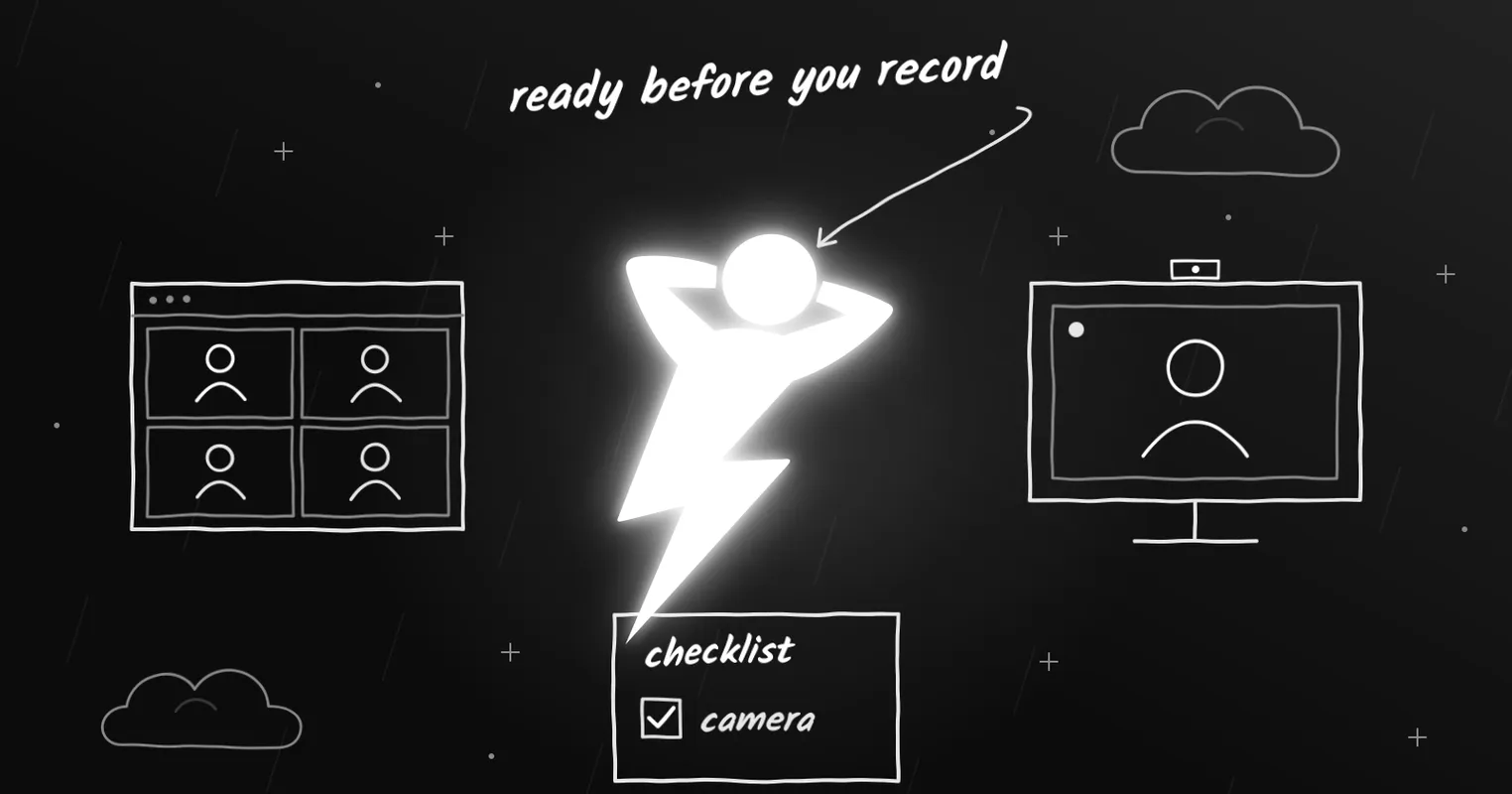
A VidCruiter interview is usually a one-way recorded interview. You see a question on screen, get some thinking time, then record your answer on camera. No interviewer is on the call. A panel watches your recordings later and scores them. To prepare, find out the timing rules in your invitation, plan each answer to fit about two minutes, test your camera and microphone, and practise speaking to a timer until it feels normal.
This guide covers how the format works, a simple 2-minute answer plan, a setup checklist, practice questions, and what public sector panels in Canada look for.
How a VidCruiter recorded interview works
VidCruiter is a hiring platform. Its pre-recorded interview is one of several formats it offers, alongside live video interviews. Here is what VidCruiter’s own product page says the employer controls:
- Thinking time: how long you get to read the question and plan before recording starts.
- Recording time: the maximum length of each answer.
- Number of attempts: whether you can re-record, and how many times.
These are set by each employer, often per question. So one interview may give you 30 seconds to think and three tries, while another gives you one try only. Do not trust a number you read online. Your invitation email and the instructions screen are the only reliable source.
Other points from VidCruiter’s pages:
- It runs in a web browser on a computer or phone, with no app to download.
- You can watch your recording back before you submit it.
- VidCruiter says its platform can offer tips, practice questions and an equipment check before the real questions begin. Use them if they are there.
- The same page lists longer answer time as a possible accessibility accommodation. If you need one, ask the employer before you start.
Before you start: read the invitation twice
Most problems come from rushing. Before you click the link, check:
- The deadline, including the time zone.
- How many questions there are.
- The thinking time, answer time and number of attempts, if listed.
- Whether written notes are allowed.
- Who to contact if something breaks.
If any of this is missing and it matters to you, email the contact and ask. That is normal and professional.
The 2-minute answer plan
Answer limits vary by employer. A 2-minute plan is a good default. If your limit is shorter or longer, shrink or stretch the middle part.
- 0:00 to 0:15, the headline: answer the question in one sentence. “Yes, I have managed competing deadlines. The best example is from my time at a regional health office.”
- 0:15 to 0:35, situation and task: where you were and what you had to do. Two sentences.
- 0:35 to 1:35, action: three clear steps you took, in the first person. This is the part the panel scores most.
- 1:35 to 1:55, result: what changed. Use a number if you have one.
- 1:55 to 2:00, close: one sentence linking back to the job, then stop.
During the thinking time, do not try to write a full answer. Pick your example and set your three action steps. If notes are allowed, jot four words on paper: one for each part of STAR (Situation, Task, Action, Result).
If STAR is new to you, read our STAR method guide.
Setup checklist
- Browser: update your browser before the day. Close other tabs and apps that use the camera.
- Camera: at eye level. Stack books under a laptop if needed.
- Light: face a window or lamp. Avoid a bright window behind you.
- Sound: a quiet room, door closed. Wired earbuds with a microphone often sound clearer than a laptop mic.
- Background: plain and tidy.
- Internet: plug in with a cable if you can. Pause downloads and streaming on your home network.
- Power: charge your laptop or phone, and keep the charger plugged in.
- Phone: silent mode, out of reach.
- Clothing: what you would wear to an in-person interview.
- Test: run the equipment check, and record a short clip to watch back.
For more on lighting and sound, see our video interview setup guide.
What government panels look for
If you are applying for a public sector job, the recording step does not change how you are judged. The panel still scores your answer against the qualifications in the job poster. In practice, that means:
- Direct answers. Answer the exact question asked. Panels often have a rating guide listing behaviours they want to hear.
- Your own actions. Say “I” for what you did. The panel cannot score your team.
- Real results. Say what changed because of your work.
- Clear speech. Speak a little slower than normal. Panels may watch many recordings in a row.
- Calm recovery. If you stumble but have no retakes, pause, say “Let me rephrase that”, and continue.
For federal questions in depth, see our list of Government of Canada interview questions. For provincial roles, see our OPS interview questions guide.
Practice questions for recorded interviews
Opening questions
- Tell us about yourself and why you applied for this position.
- What do you know about our organization and its mandate?
- Why do you want to work in the public sector?
Behavioural questions
- Tell us about a time you managed several deadlines at once.
- Describe a time you received critical feedback. What did you do with it?
- Tell us about a time you worked with someone whose working style was very different from yours.
- Describe a time you solved a problem with limited information.
- Tell us about a time you explained something complex to a client or member of the public.
- Describe a time you took initiative to improve how something was done.
- Tell us about a time you made a mistake at work.
Situational questions
- A client is angry because their file has been delayed. What would you do?
- Your manager is away and an urgent request arrives that is outside your usual work. How do you handle it?
- You notice a colleague is not following a required procedure. What do you do?
- You have two tasks due at the same time and cannot finish both. What do you do?
Closing questions
- Is there anything else you would like the panel to know about your qualifications?
For question 1, our tell me about yourself guide and free tell me about yourself generator will help you build a 60 to 90 second opener.
Sample answers that fit two minutes
”Tell us about a time you managed several deadlines at once.”
- Situation: “At my last job as an office coordinator, our team prepared three year-end reports due in the same week, and one colleague was on leave.”
- Task: “I was responsible for collecting data and formatting all three reports.”
- Action: “First, I listed every input each report needed and who owned it. I asked each owner for their piece two days earlier than usual, so I had time to fix gaps. I built one shared template, so formatting took minutes instead of hours. When one report’s data came in late, I told my manager right away and suggested we submit it with a short note on the missing figure, which she approved.”
- Result: “All three reports went in on time. The late figure was added the following week, and the shared template is now used every year."
"You notice a colleague is not following a required procedure. What do you do?”
- Situation: “I would first make sure I understood what I saw. Say a colleague was skipping the second check on payment files.”
- Task: “My goal would be to protect the process and treat my colleague fairly.”
- Action: “I would speak to them privately and ask about it, since there may be a reason I do not know, such as a new instruction. If there was no good reason, I would remind them of the rule and offer help if workload was the problem. If it continued, or if a payment had already gone out wrong, I would tell my supervisor, because the risk is to the public, not just to our team.”
- Result: “In a similar case at my last job, a short private chat fixed it, and we added the step to our team checklist."
"Tell us about a time you explained something complex to a member of the public.”
- Situation: “I worked at a community centre front desk. A senior visitor was confused by a benefits form that asked for income from three different years.”
- Task: “I needed to help her understand the form without filling it in for her.”
- Action: “I asked what she already had, then broke the form into three short parts. I used her own documents to point to each line and wrote a one-line note in plain words beside each section. I also gave her the program’s phone number for questions I could not answer.”
- Result: “She completed the form herself that afternoon. She came back the next month to say it had been accepted, and my manager asked me to turn my notes into a handout for the desk.”
How to practise
Write your stories first with our free STAR method answer builder, which also checks length. Then record yourself on your phone with a timer that matches your interview, and watch it back once for content and once for delivery.
InterviewStorm can help in that rehearsal stage: load your resume, read a practice question aloud, answer it, and compare your answer with the STAR structure it suggests from your own experience. Follow each employer’s interview rules. Do not use InterviewStorm in proctored tests, exams, or anywhere AI help is not allowed. A recorded interview is part of the assessment, so do it on your own.
FAQ
Can I retake my answers in a VidCruiter interview?
Only if the employer allows it. The number of attempts is a setting each employer chooses, sometimes per question. Check your instructions before the first question.
What if my internet drops in the middle of an answer?
Stay calm and contact the person named in your invitation as soon as possible. Explain what happened and when. Many employers can reset a question, but only if you tell them.
Can I use notes?
Follow the instructions you were given. If they say nothing, ask. Even when notes are allowed, reading from a script sounds flat. Short prompts work better.
How long should my answer be?
Use most of the time you are given, but do not pad. If you have two minutes, aim to finish between 1:40 and 1:55.
Share Articles:
Similar Posts